June 2026 Newsletter
Dear Friend —
There’s no easy way to make change. We teach that, and we see it at work in the Haitian farmers holding international institutions accountable, and in every story in this month’s newsletter. Thank you for believing in the power of organized people to change their communities and the world. We are also grateful for the 60 donors who contributed $24,478 to our Spring appeal.
Haiti: Haitian Farmers to IDB: Invest in Us, Not Foreign Contractors
Smallholder farmers in Haiti are urging the Inter-American Development Bank (IDB) to rethink how it invests in Haitian agriculture.
Eighty-five peasant and civic organizations in North and Northeast Haiti presented the IDB with a platform titled We Plant Today So We Can Feed Ourselves Tomorrow, calling for investments in irrigation, seed banks, access to credit, crop insurance, and farmer-led development. They are asking the bank to channel resources through Haitian organizations rather than foreign contractors.
The Smallholder Farmer Platform emerged from consultations with grassroots organizations across Haiti and a survey of more than 1,100 farmers in 74 communities conducted by the People’s Organization for the Development of Haiti (OPODHA). Farmers are asking to be consulted on a $44.2 million sustainable agricultural project in North and Northeast Haiti before the IDB Board votes on it in September.
➡️ Read more
➡️ Add your name to an International Support Letter to the IDB
➡️ Register for out International Allies call on June 24 at 3pm
Honduras: Rural Communities Unite to Advocate for Roads and Healthcare
Three dozen COFOA leaders, accompanied by local mayors, traveled from rural communities in the Francisco Morazán Department to the capital, Tegucigalpa, in May to advocate for the paving of 17 kilometers of road connecting 30 communities and 30,000 residents between Sabana Grande and Nueva Armenia.
Although leaders had expected to meet with the President of the National Congress, they instead met with Legislative Representatives Lizzy Cano, Sarai Espinal, and Yosi Toscano. During the meeting, the legislators confirmed that the Ministry of Infrastructure and Transportation (SIT) had approved the road project. They promised the COFOA leaders a detailed report outlining the project’s scope and implementation timeline.
Recognizing that previous commitments have not always been fulfilled, leaders began organizing a June 20 mobilization to ensure officials follow through on their promises.
This marks the second major collective action led by COFOA-organized communities in Honduras. Leaders are also negotiating for a new regional health center that would expand healthcare access for rural families.
➡️ Donate to support grassroots organizing in Central America
Guatemala: Residents win Sanitation System
Community leaders from COFOA Guatemala celebrated the inauguration of a new drainage system in San Miguel El Cedro, Parramos, Chimaltenango. The municipality invested approximately Q2 million ($265,000 USD) in the project, which will improve sanitation and quality of life for local residents.
This progress reflects the power of community organizing to create accountability over local governments and deliver material improvements in people’s lives. The organizing in Parramos is part of a larger effort to build organizing teams across the Sololá and Chimaltenango Departments in Guatemala’s western highlands and to help strengthen the country’s fragile democracy.
➡️ Donate to support grassroots organizing in Central America
Rwanda: Leaders Gather for National Training
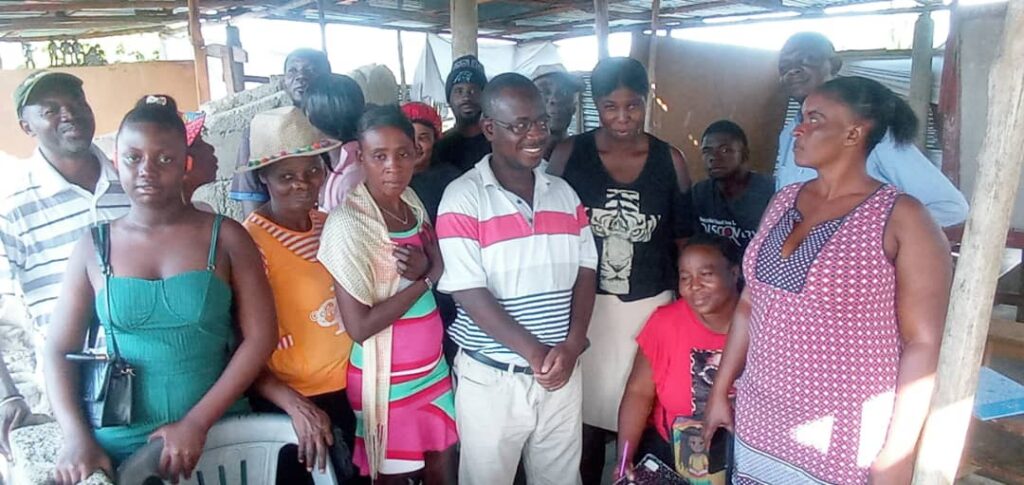
“I wish these organizing principles and disciplines could be taught to the whole country. PICO must live in you, and you must live in PICO.” – Felicien Ngabonziza, new leader from Nyamata
Between planting season and the annual commemoration of the genocide, 54 new leaders from organizing committees across Rwanda gathered for a national training focused on the fundamentals of community organizing.
Participants explored leadership development, relationship-building, issue identification, and strategies for collective action. Leaders returned to their communities with plans to address concerns identified by residents in their villages, including access to clean water, reforestation, and road and bridge building.
While Rwanda has been seen as a model for sustained economic and social development, there remains an enormous gap between economic growth in Kigali and living conditions in rural areas, where most Rwandans live.
➡️ Support Grassroots Organizing in Africa
Eastern Europe: Lessons from Hungary
On April 12, Hungarians turned out in record numbers to end 16 years of authoritarian rule. On May 28, we had a chance to hear directly from Hungarians about their experiences living under the Orbán regime and how it was defeated. Béla Rácz of One Hungary, Rev. Márta Bolba of Mandák House, and Bernadett Sebaly of Central European University shared what it took to continue organizing when democratic institutions were undermined and what the restoration of democracy makes possible. Hungary has many lessons for people organizing for democracy and social inclusion around the world.
➡️ Recording of the May 28 Hungary Lessons webinar
➡️ How to Remove an Authoritarian Leader: Lessons from Hungary
➡️ When the Model Breaks: What Hungary’s Election Means for Democracy
Stay Connected: Follow us on Facebook and Join Our WhatsApp News Channel
Get the latest news about grassroots organizing in Africa, Latin America, Haiti, and Eastern Europe by joining Faith in Action International’s new WhatsApp news channel.
👉 Join our WhatsApp News Channel
👉 Follow us on Facebook
With respect,
Fr. John Baumann, S.J.
and the Faith in Action International team
