August 2026 Newsletter
Dear Friend —
The one who suffers the need must be at the front of the solution. That spirit animates the progress we share this month—from Honduras, Haiti, El Salvador, Colombia, and Rwanda—where grassroots leaders are building the future for their families and communities.
As always, we’re deeply grateful to you for being part of our bottom-up social change movement!
Honduras: Partnering with Mayors to Win Regional Priorities for Rural Communities
In Francisco Morazán, COFOA-Honduras has united local communities, mayors, and legislators to advance two regional priorities: a regional health facility serving the north of the department, and the paving of a 17-kilometer stretch of highway in the south.
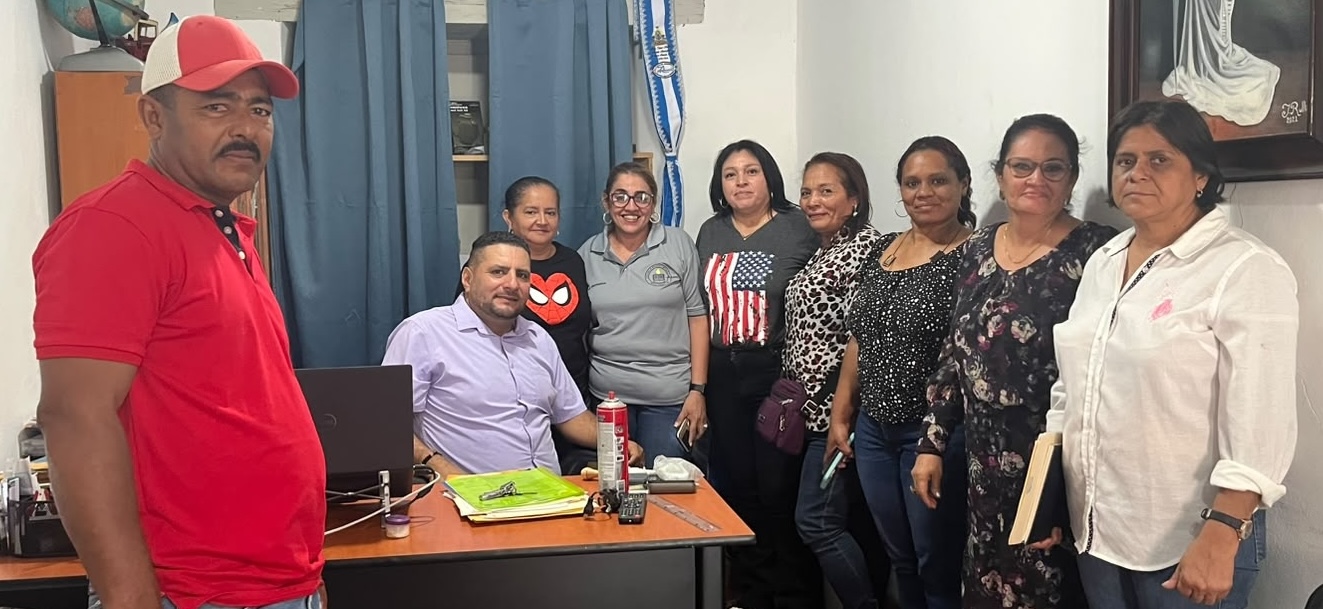
In July, COFOA leaders convened a meeting with 13 mayors from northern Morazán. They agreed to work together to equip the Centro Materno Infantil in Talanga to function as a regional polyclinic offering maternity and specialty care. They also backed a new center for kidney patients, who now must travel to Tegucigalpa for dialysis, and secured land for its construction. The mayors agreed to prepare a formal public statement calling on the National Congress to fund the facility’s construction and operation.
In the south of the department, COFOA leaders are pressing to pave a highway serving 31 rural communities. In July, working with local mayors, they won a public commitment from the Minister of Infrastructure and Transportation to make the road the third stage of a multi-million-dollar investment intended to reduce isolation, expand opportunities for trade and agricultural production, and improve access to basic services.
Together, these campaigns illustrate the growing ability of COFOA leaders to work across municipal boundaries, partner with mayors, and win regional solutions to problems that no single community could solve alone.
➡️ Donate to support grassroots organizing in Central America
Haiti: OPODHA Prepares for Its General Assembly
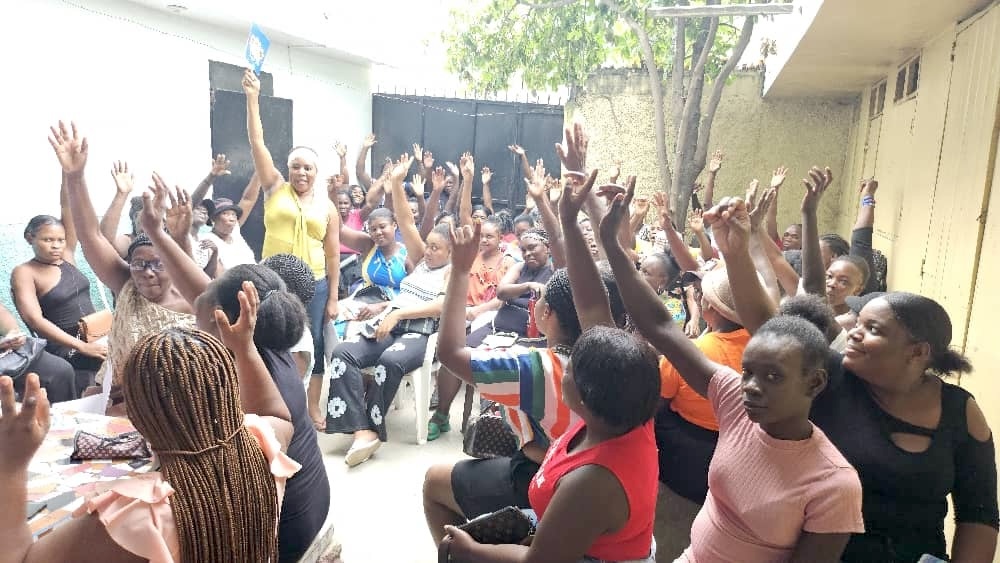
In Haiti’s North and Northeast Departments, OPODHA leaders are preparing for a general assembly at the end of August that will bring more than 500 members together with Departmental Directors of Agriculture and other officials to secure commitments to support smallholder farmers.
OPODHA members in 74 communities are electing new officers ahead of the assembly. In late July, 47 leaders gathered in Mont Organisé to select their new leaders—an exercise in democratic practice as the organization readies itself to press the government to address the needs of rural communities.
In July, OPODHA leaders also met with the Directors of Agriculture in the North and Northeast Departments to secure their support for key farmer priorities, including building Community Seed Banks in each Department.
With support from the Bank Information Center and Faith in Action International, 85 Haitian civic organizations wrote a letter to the board members of the Inter-American Development Bank (IDB) asking them to make changes to IDB’s $44 million agricultural project. They also briefed U.S. Treasury officials who sit on the IDB’s board.
The steady rhythm of electing leaders, researching problems, and engaging officials is how OPODHA is building the capacity of Haiti’s rural communities to make their voices heard.
➡️ Add your name to a support letter to the Inter-American Development Bank
➡️ Read Haitian media coverage about OPODHA’s We Plant campaign
Haitian Diaspora: Protecting Haitian Families After the End of TPS
The official end of TPS for Haitians on August 5 was a devastating blow to Haitian families and communities across the United States. More than 350,000 people lost their legal status and work permits and are now at risk of detention and deportation. Already, DHS has begun placing ankle monitors on former Haitian TPS-holders in Springfield, OH, which has been ground zero for scapegoating Haitians.
Amid the ugly drumbeat of pressure to deport hardworking Haitian immigrants to a country in crisis, Faith in Action International, the Haitian Bridge Alliance, Institute for Justice and Development in Haiti, Tabernacle of Glory, and many other organizations are working to make sure communities have the information and support they need to protect Haitian families from being broken apart by deportations.
We’ve held a series of large webinars to provide guidance to faith communities, and we continue to press the Senate to act on House legislation that would extend Haiti TPS.
➡️ Toolkit from the Haitian Times
El Salvador: Grassroots Leaders Carry On
When 407 COFOA members met at the Jesuit Central American University in San Salvador at the end of March, they opened with Joshua 1:9: “Have I not commanded you? Be strong and courageous. Do not be afraid; do not be discouraged, for the Lord your God will be with you wherever you go.” They resolved to continue their organizing despite the closure of COFOA as a Service Center of the Diocese of Zacatecoluca.
Since March, COFOA’s Local Organizing Committees have continued to meet and to negotiate with public officials in El Salvador. When they meet with their mayors, developers, or the national electric company, they are no longer accompanied by paid staff, but they are not wavering in putting what they’ve learned into action. If anything, the shift has made grassroots leaders more confident in knowing that they have built a movement that belongs to the people of El Salvador and cannot be stopped.
For example, on July 18, COFOA leaders from the Los Prados gathered to consider a proposal by the original owner of their housing development to provide them with their deeds. While the legalization process moves forward for thousands of families across the country, COFOA leaders bring deliberation and decision-making before the entire community. The next step is a community assembly in August.
Leaders from multiple communities continued to meet with representatives from the national electricity company to press their case to obtain electrical service for their developments. COFOA leaders also joined with other organizations in the Walk for the Environment, sending a strong message of opposition to metallic mining in El Salvador.
Their experience offers an important lesson for communities around the world confronting authoritarianism: strong relationships, collective identity, and organized action can create space for people to continue making their voices heard.
➡️ Read more about COFOA’s work in El Salvador
Colombia: From Listening to Collective Action on Land Rights
Note: Soacha, where we support organizing, is 500 km from the site of the devastating earthquake that hit Western Colombia. You can donate directly to Caritas Colombia to support their relief efforts in some of the poorest communities in Colombia.
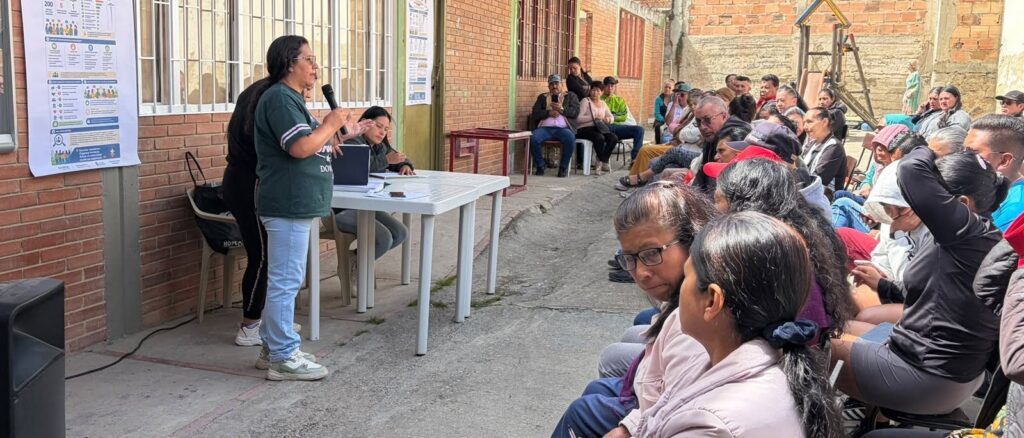
On July 31, 136 residents of the La Capilla neighborhood in Soacha, Colombia came together for their first general community assembly to identify their highest-priority issue and establish a research committee to pursue solutions.
After an extensive listening campaign, 130 residents identified securing legal status for the community as the essential first step toward addressing other concerns, including water, trash collection, and infrastructure.
The assembly marked an important transition from listening to collective action. A research committee was established to engage government officials and identify a path toward legalization. In another community, Julio Rincón, leaders completed a similar listening campaign with 145 families, where the need for clean drinking water rose to the top of their agenda.
Since February, 2,253 people have participated in meetings and events as part of the new COFOA organizing effort in Soacha. Five local committees, with 76 active grassroots leaders, have begun to meet to organize their communities, and four more are in formation.
Colombia is the first South American country where COFOA and Faith in Action International are working. Soacha is home to tens of thousands of internally displaced families, many of whom are living on land they don’t have title to and lacking basic services and stable employment.
The partnership with the Diocese of Soacha has created an opportunity to adapt COFOA’s organizing methods to the social reality of the Bogotá metropolitan region and is drawing on long-standing traditions of popular education and religious social action in Colombia. A similar effort is underway with the Archdiocese of Lima in Peru.
➡️ Check out a dashboard on organizing in Soacha, Colombia since February
Rwanda: When Communities Organize, Recovery is Faster
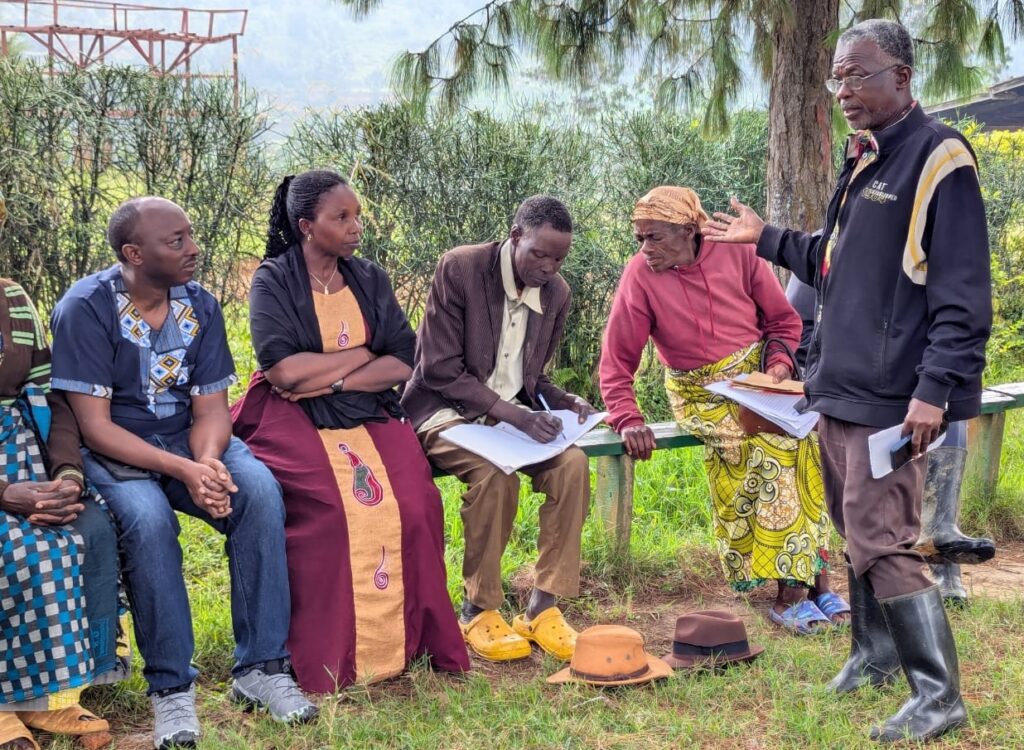
In Rwanda’s Eastern Province, community organizing is helping turn back an outbreak of Rift Valley Fever, a disease that threatens both livestock and the families who depend on them.
Trained by government animal-health experts, leaders of the MUMEYA local organizing committee have taken responsibility for sharing what they learned with their neighbors. Gathering people for hands-on sessions — walking through printed guidance together and demonstrating safe practices in the field — they are equipping households with the measures that protect their cattle and secure their livelihoods.
It is a reminder that organized communities are not only a way to win services from government. They can also partner with officials to reach people quickly when it matters most. As the leaders put it, when communities organize, recovery is faster and stronger.
The Transformative Power of Organizing
At the end of August, staff and leaders from Rwanda and Ghana will participate in the International Conference on Community Psychology in Lagos, Nigeria, to present preliminary findings on research we are doing with Professors Paul Speer, Jyoti Gupta, and Brian Christens at Vanderbilt University.
The through line for that research, on our work in Ghana, Rwanda, El Salvador, and Haiti, is that when organizations listen to people and include them in decision-making, they not only generate more participation but also transform how people see themselves and the world. We’ll share more about this research in future newsletters.
In solidarity,
Fr. John Baumann, S.J.
and the Faith in Action International team
