
Colombia: COFOA’s Organizing Method Takes Root in Soacha
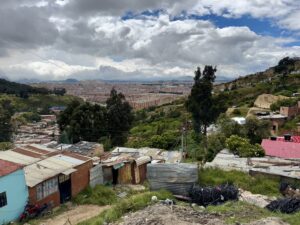
For the first time, COFOA’s community organizing model is taking root in South America—in the hills of Soacha, Colombia, where tens of thousands of families live without reliable water, paved roads, or legal land titles.
Starting in Soacha
In January 2026, with the support of Faith in Action International, the Diocese of Soacha Social Ministry Office, led by Fr. Alexander Ramirez, hired David Vazco as a community organizer. David then traveled to El Salvador for several weeks of intensive training in COFOA’s approach to community organizing.
His role when he returned in February: develop grassroots leadership and organizations in the hillside communities of Communes 4 and 6 in Soacha, a sprawling municipality on the outskirts of Bogotá, home to many families displaced by conflict who live in informal settlements where basic services are scarce, and organizing is challenging.
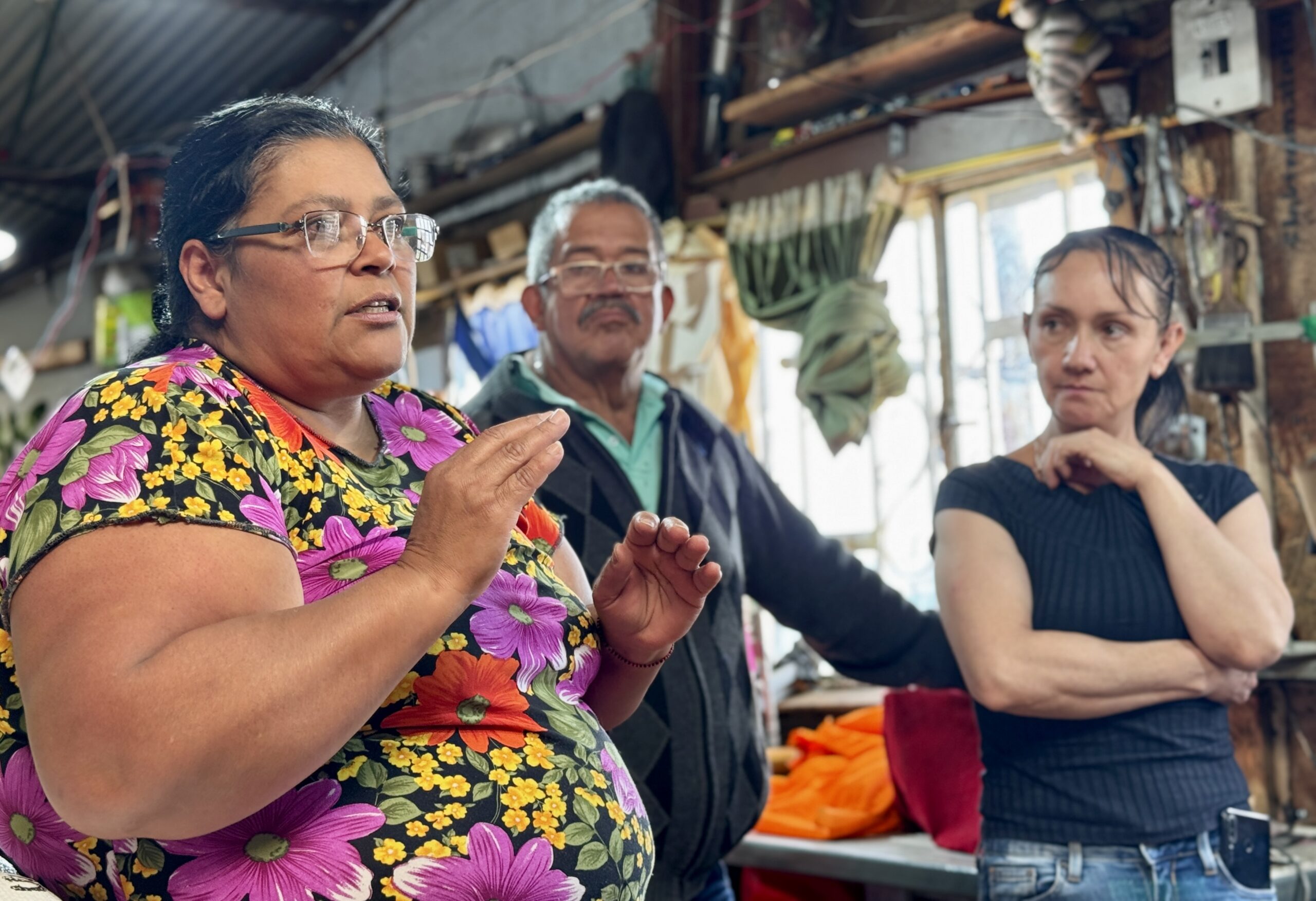
David’s first weeks followed a familiar COFOA pattern: walking neighborhoods with priests and trusted community leaders, meeting people one by one, and building trust before asking for anything.
He met with leaders of Asociación Codo a Codo in Altos de la Florida, with the Diocese of Soacha’s Pastoral Social, and with officials from the municipal government’s Office of Religious Affairs and Community Participation. He attended Mass in Tres Reyes and introduced himself during announcements. He sat with a community leader who had spent 45 years fighting for her neighborhood and asked what mattered most to her.
What emerged was consistent across communities: a lack of potable water, unpaved, impassable roads, insecure land tenure, and safety concerns that make organizing feel risky.
But the leaders he met were not waiting to be rescued. They were looking for ways to organize.
Alliances at Every Level
From the beginning, the work has relied on building relationships at multiple levels.
The Bishop of Soacha, Monseñor Juan Carlos Barreto, has welcomed COFOA as part of the diocese’s pastoral mission. Parish priests in La Isla, Altos de la Florida, and Balcanes have opened church spaces for meetings.
Municipal offices have promised to meet with local organizing teams as they begin researching issues. The UN Refugee Agency, which is active in Soacha due to the presence of many displaced families, and Minuto de Dios University have expressed interest in collaborating in the future.
Eight Weeks of Groundwork
Between February 2 and March 30, David made 68 field visits, connected with 569 participants, and filed 129 field reports.
This reflects a core principle of the model: organization is built one conversation at a time.
In Soacha, that has meant one-on-one meetings in homes, conversations after Mass, and small gatherings in community spaces. Across these conversations, the same issues continue to surface: water, roads, land, and safety.
In some neighborhoods, past organizing efforts have stalled due to division or distrust. For that reason, the work is starting with issues that can build trust and unity.
Committees Taking Shape
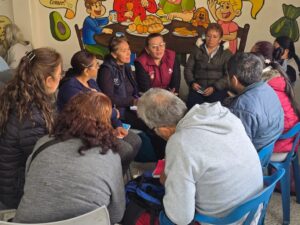
Eight Local Organizing Committees are now in development—three active and in training, with 55 committed members, and five more in formation.
In Altos de la Florida, leaders are organizing around water access, road paving, and sewage infrastructure. In La Isla / El Oasis, the first trainings have focused on one-on-one conversations and identifying shared interests.
At a March 21 assembly in Cazucá, residents formed three new committees across neighboring sectors. Their trainings begin in April.
What Moves People
The work centers on understanding what matters to people—not in theory, but in their daily lives.
Across communities, similar concerns emerge: dignity, safety, and a future for their children.
As COFOA’s regional director Alberto Velásquez put it:
“Self-interest is what moves people—and when you identify the self-interest of several community members, collective interest emerges.”
Looking Ahead
The next phase will focus on training, listening campaigns, and eventually negotiations with the local government for improvements in water, roads, and land rights.
The context is complex. Soacha is urban, densely populated, and shaped by displacement and insecurity. But the foundations are in place: a committed organizer, a supportive diocese, and growing relationships across communities.
Fifty-five people have already committed. More are joining each week.
